
The month of June is a time when many celebrate Pride and the milestones achieved in the fight for equality, visibility, and the freedom to love openly. It is also a time to reflect on the challenges the LGBTQ+ community has faced throughout history and continues to face today. From discriminatory legislation, barriers in accessing basic services, and for some, losing their support system. LGBTQ+ community members are also susceptible to encountering obstacles that threaten their safety and well-being.
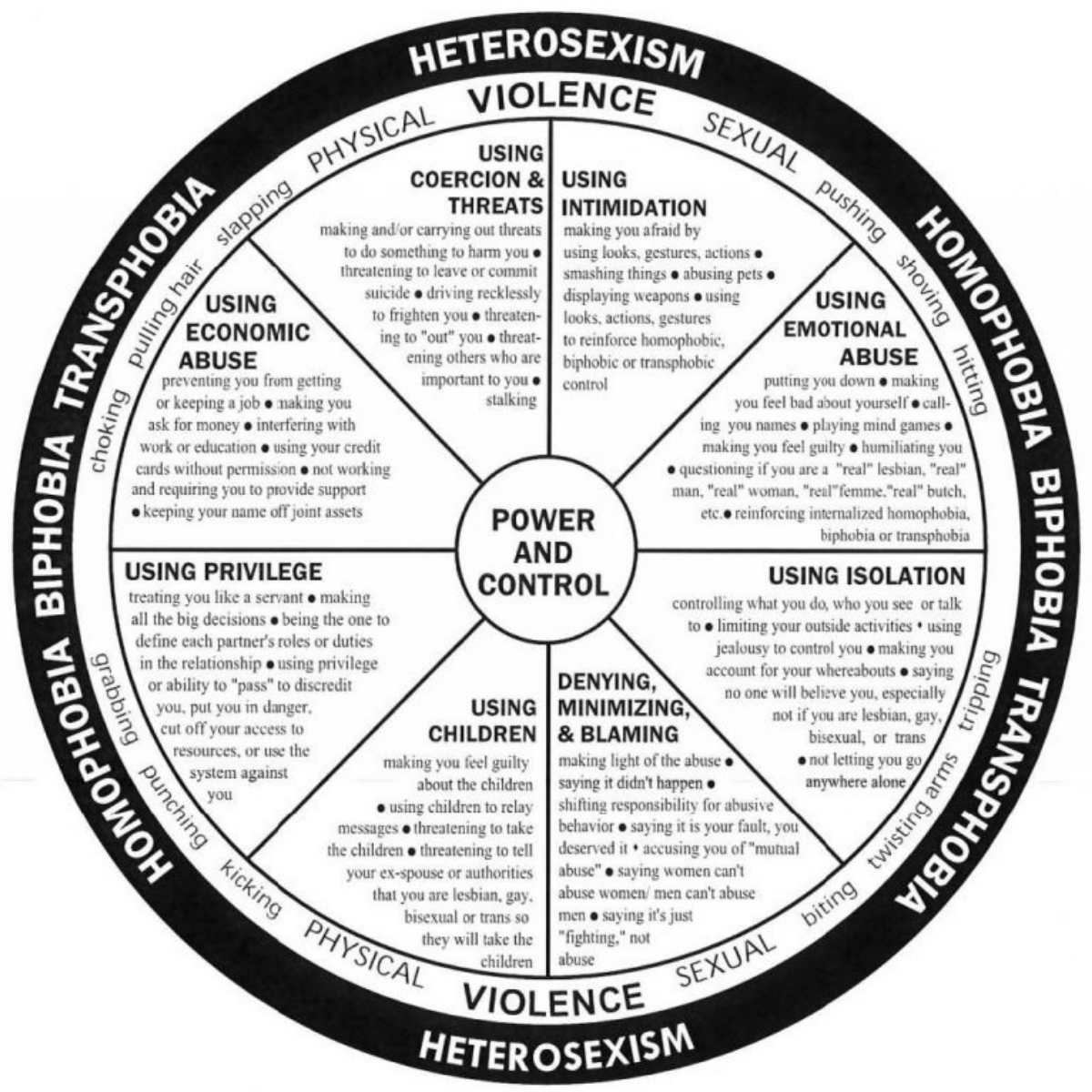
To understand the challenges faced by LGBTQ+ survivors, it is important to review the tactics abusers use to gain and maintain control. Developed by Roe and Jagodinsky, the LGBTQ+ Power and Control Wheel expands upon the traditional Power and Control Wheel by highlighting abuser tactics that are particularly relevant within LGBTQ+ relationships. These tactics can include threatening to "out" a partner's sexual orientation or gender identity, questioning or attacking their identity, and exploiting societal discrimination. By using these forms of manipulation alongside more commonly recognized abusive behaviors, abusers can create an environment in which survivors feel trapped and believe they have nowhere to turn for help.
In the 2010 National Intimate Partner and Sexual Violence Survey, researchers found that 44% of lesbian women and 61% of bisexual women experienced some form of intimate partner violence during their lifetime. Among men, 26% of gay men and 37% of bisexual men reported experiencing intimate partner violence. It is important to note that this study doesn’t include the multitude of other identities that persons in the queer community identify with. Many LGBTQ+ identifying survivors face significant barriers when seeking help. Limited awareness of available resources, fear of discrimination, and concerns about being misunderstood or harmed can prevent individuals from accessing support. As a result, survivors may become isolated from their families, friends, and support systems, making it even more difficult to leave abusive relationships.
Despite its prevalence, stigma, discrimination, and a lack of inclusive resources, survivors are often without the support they need. By bringing greater awareness to this issue, we can better understand the unique challenges LGBTQ+ survivors face and work toward creating safer, more inclusive systems of support.
So, what can we do to provide support to someone who is experiencing intimate partner violence?
1. Be present and listen without judgement:
If a loved one comes to you looking for safety and someone to talk to, listen without judgement, and let them know it is not their fault. It can be hard for victims of DV to reach out for help, especially if they feel they cannot trust anyone.
2. Connect to local resources:
Encourage and help your loved one find the support through specialized LGBTQ+ domestic violence prevention services. These services can help survivors recognize signs of abuse, develop plans for safety, and access support from providers who understand LGBTQ+ identities and experiences.
3. Develop a safety plan:
Let your loved one know that you will be there for them, and help create a safety plan for when they are ready to leave their abusive partner. Create a list of contacts to reach out to, and where to go if the situation escalates and they need to immediately leave. Keep in mind that we should respect survivors’ choices and their decision if they are ready to leave.
4. Help break the stigma of domestic violence in your community:
Have conversations with friends and family about domestic violence, especially within the LGBTQ+ community, and break the stigma. By having these conversations, we can create safer spaces for survivors to find help, as well as break the cycle of violence.
As we celebrate Pride Month, we can also commit to supporting LBGTQ+ survivors, and foster communities where everyone can live free from violence, discrimination, and fear. If you or someone you know is in need of support, La Casa de las Madres is available twenty-four hours a day through our crisis call and text line. Survivors can also access LGBTQ+ resources through the Community United Against Violence (CUAV) resource directory and the SF LGBT Center.