
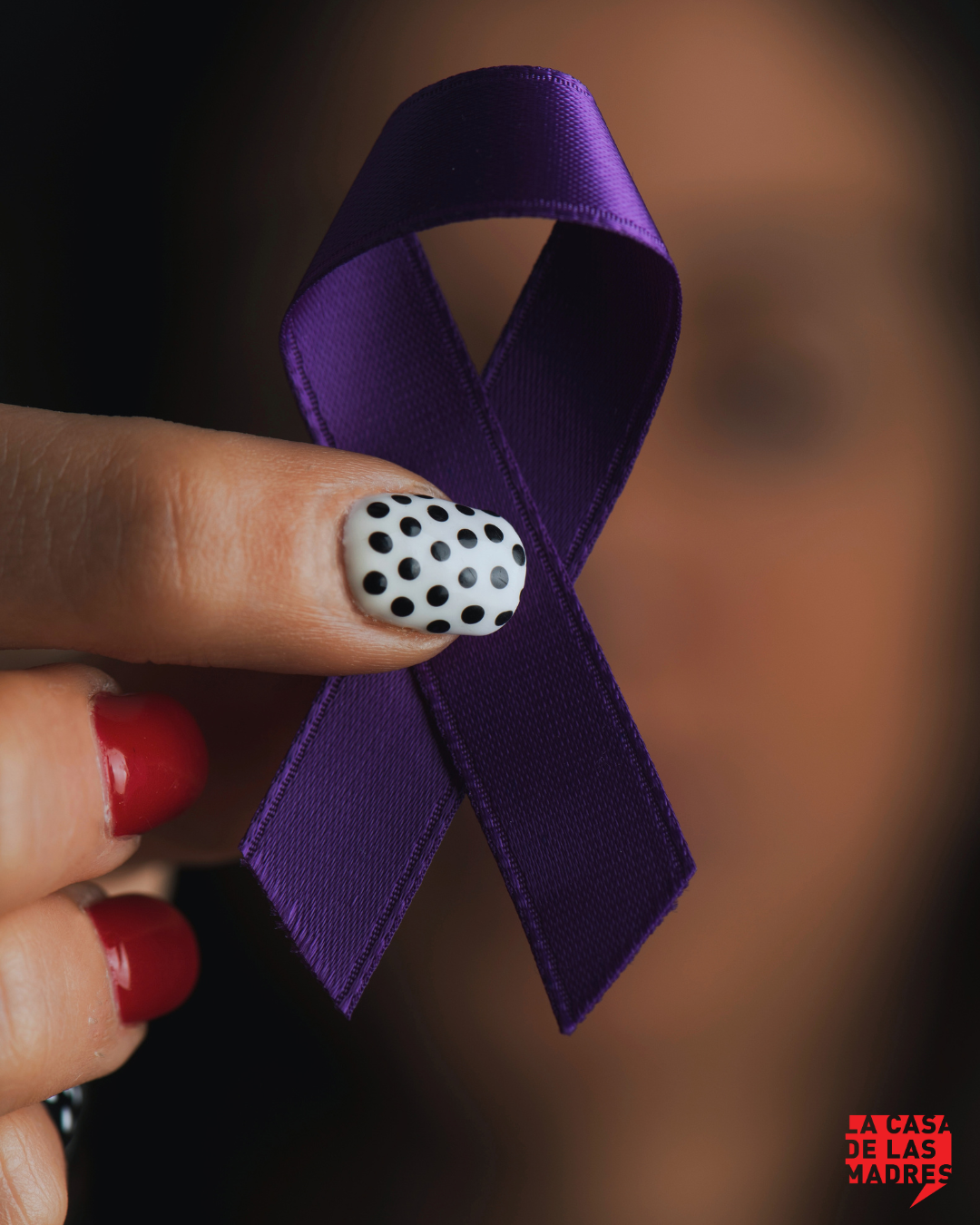
October is National Domestic Violence Awareness Month. The roots of DVAM date back to 1981, when the National Coalition Against Domestic Violence (NCADV) observed the first Day of Unity. This day was meant to connect communities and advocates for survivors nationwide to raise awareness about domestic violence. From there, the Day of Unity evolved into what we know as Domestic Violence Awareness Month. The first observance being 1987, then federally recognized two years later, in 1989. This month, La Casa de las Madres wants to share with our community what domestic violence could look like, how to identify warning signs, and what resources are available for survivors.
Domestic violence can happen to anyone, at any point in their lives, and it can take many forms, including physical, psychological, emotional, sexual, and financial abuse. It can involve controlling behaviors that make someone feel isolated, afraid, or unable to make decisions for themselves. Understanding what abuse can look like is an important part of recognizing it, not only in your own relationships, but in the relationships of people around you.
What Can Domestic Violence Look Like?
When people think of domestic violence, they might picture physical violence: a visible injury, an argument that becomes dangerous, or a situation that seems unsafe from the outside. However, not all abuse is visible. Domestic violence can involve many tactics, including behaviors that may not leave any physical marks. These behaviors can be part of a pattern used to gain or maintain control over an intimate partner.
For example, a partner may:
Constantly check where you are, who you’re with, or what you’re doing
Demand access to your phone, social media, or passwords
Isolate you from family, friends, coworkers, or other support systems
Control your access to money, employment, transportation, or other resources
Put you down, insult you, make you feel less than
Blame you as responsible for their behavior
Threaten to hurt you, themselves, your children, pets, or someone else you care about
Pressure or force you into sexual activities
Make decisions for you or repeatedly ignore your boundaries
Some of these behaviors may be dismissed as jealousy, protectiveness, conflict, or “just the way someone is.” But when a person’s behavior is used to control, intimidate, isolate, or create fear, it can be a warning sign of abuse.
Recognizing abuse means looking beyond isolated incidents. Relationship violence is categorized by behavioral patterns over time. A difficult part of recognizing domestic violence is understanding that abusive behavior can exist alongside moments of affection, kindness, or apologies. Someone experiencing abuse may be unsure whether what they are experiencing “counts” as domestic violence. Every survivor’s experience is different; it may take time to identify behaviors, patterns, and what the next steps might be.
You might notice that someone you care about:
Seems increasingly withdrawn from friends or family
Appears nervous about upsetting their partner
Has unexplained injuries or changes in their behavior
Is experiencing financial difficulties or suddenly has limited access to money
Describes feeling responsible for their partner’s behavior
Has stopped participating in activities they previously enjoyed
Seems afraid to disagree with or disappoint their partner
These signs do not automatically mean someone is experiencing domestic violence; however, noticing them can be an opportunity to check in.
How La Casa de las Madres Supports Survivors
La Casa de las Madres provides free, confidential, multilingual, and culturally inclusive support to survivors of domestic violence. Our services include crisis intervention, safety planning, counseling, support groups, housing assistance, advocacy, and emergency shelter. These resources are available to support survivors regardless of where they are in their healing journey, based on their individual needs and circumstances. This approach reflects our commitment to supporting survivors in reclaiming their decision-making.
At the heart of La Casa’s work is an empowerment model, giving survivors the tools to reclaim their lives and learn to live on their own terms. Rather than telling survivors what they should do, our advocates work with them to understand their options, identify their needs, and make decisions that feel best for them. We believe that every survivor deserves to have their choices, experiences, and autonomy respected.
If you or someone you know is experiencing domestic violence, support is available. Our advocates are here to listen, provide information, and support you through your journey towards a future free from violence.
Resources - La Casa de las Madres
24/7 Crisis Hotline: 877-503-1850
24/7 Teen Line: 877-923-0700
24/7 Text Support Line: 415-200-3575
This Domestic Violence Awareness Month, look beyond what is visible. Learn the warning signs, challenge the stigma, and help create a community where every survivor feels safe, listened to, and believed.